


Diecast Car Display Case Ideas for 1:18, 1:43 and 1:64 Collections
By Hobbyco Editorial Team · · 12 min read
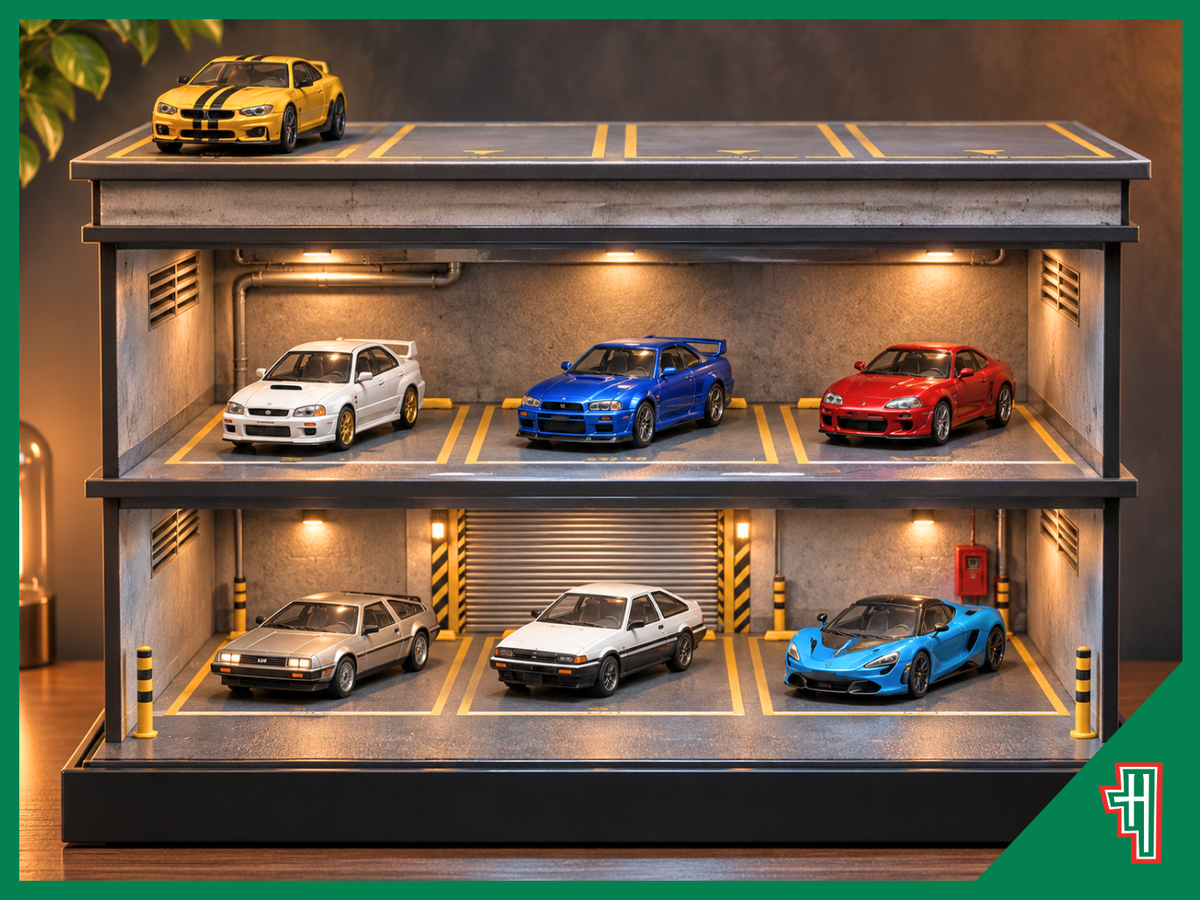
A good display protects your models, makes each car easy to see and leaves room for the collection to grow. The best diecast car display case ideas depend on scale, actual model dimensions, collection size and the space available in your room. A case for one 1:18 centrepiece needs a different depth and shelf load from a cabinet holding dozens of 1:64 cars.
This guide compares single-car covers, multi-level cases, wall cabinets, bookcase conversions and modular displays. It also explains how to measure clearances, manage dust, position lighting and arrange mixed-scale collections without making every shelf feel crowded.
TL;DR
-
Measure the actual model, including mirrors, antennas, opening panels and display base, before choosing a case.
-
Allow handling clearance around the car instead of matching the case to the model’s exact length and width.
-
Use single-car covers for feature models, multi-level cases for compact scales and cabinets for growing collections.
-
A dustproof model car case reduces routine cleaning, but most display cases are not airtight.
-
Keep models away from direct sunlight, high heat, damp areas, unstable shelves and strong point-source lamps.
-
Use low-heat lighting, conceal cables and follow the case manufacturer’s electrical and weight limits.
-
Group cars by scale, marque, era, colour or motorsport theme, then leave some empty space around focal models.
-
Plan spare capacity now so a new purchase does not force a complete display rebuild.
Measure the Models and the Room First

Scale is only the starting point. Two real vehicles can have very different dimensions, so their miniatures can differ even when both are labelled 1:18, 1:43 or 1:64. Packaging, plinths, mirrors, wings and antennas also change the space required. Check the product listing where dimensions are supplied, then measure the model itself before ordering a display.
Measure length, width and height at the widest and tallest points. If doors, bonnet or boot will be shown open, measure the model in that position. Add space for your fingers or a safe lifting method so the car can be removed without scraping the cover. For a rotating display, confirm the full turning circle rather than only the base width.
Next, measure the intended furniture or wall area. Record available width, depth and height, power-point access, skirting-board clearance and the position of windows, doors and air-conditioning outlets. A wall cabinet also needs a suitable wall structure and fixings. Follow its installation instructions and use professional help where the mounting method is unclear.
Choose a Display Format by Scale

The same display style can work at several scales, but its capacity and visual effect will change. Larger models need depth and individual breathing room. Smaller cars benefit from levels, narrow shelves or repeated compartments that keep rows visible. Use actual dimensions rather than assuming every product marked for a scale will fit.
|
Scale |
Useful display formats |
Planning priorities |
|---|---|---|
|
1:18 |
Single-car acrylic covers, deep cabinet shelves, paired feature displays |
Depth, shelf load, opening panels, stable base and visual space |
|
1:43 |
Multi-car cases, tiered shelves, wall cabinets, motorsport grids |
Base dimensions, label visibility, shelf height and consistent spacing |
|
1:64 |
Multi-level cases, narrow wall displays, modular compartments and dioramas |
Capacity, front visibility, easy access and avoiding overly deep rows |
|
Mixed scale |
Zoned cabinet, separate shelves or one large feature area plus compact grids |
Clear grouping, proportion, weight distribution and room to expand |
Hobbyco’s current diecast car collection covers several popular scales and vehicle types. Compare the individual product for its exact dimensions, included base, packaging and features before committing to a display plan.
Diecast Car Display Case Ideas for 1:18 Models

A 1:18 model has enough presence to become a focal point. One clear cover on a low plinth works well for a favourite road car, race winner or Australian classic. It creates a defined viewing area and keeps the model visually separate from nearby objects. A black, mirrored or neutral base can change the presentation without adding a busy background.
For several 1:18 cars, use a deep cabinet with adjustable shelves. Place the heaviest models on lower shelves where practical and stay within the furniture’s load rating. Avoid long unsupported glass spans unless the cabinet manufacturer approves the weight. Secure tall furniture according to its anti-tip instructions, especially in homes with children or pets.
A single 1:18 case may be designed around a common model size but still not fit every car. Hobbyco lists a 1:18 display case with published dimensions, which illustrates why the case measurements should be compared with the exact model rather than the scale label alone.
Create a Centrepiece Shelf

Give one or two important cars more room than the rest of the collection. Position them near eye level and angle them slightly only when the shelf depth safely allows it. A small information card can identify the vehicle, year or event, but keep labels consistent and avoid covering the wheels or lower body.
Display Ideas for 1:43 Collections

Collectors often display diecast cars in 1:43 when they want a broad motorsport, marque or historical sequence without the depth required by 1:18. A multi-car case can present a complete team, championship season or vehicle generation on one shelf. Repeated bases and evenly spaced labels create a clean archival look.
Tiered risers help cars in the rear remain visible, but each level must be stable and deep enough for the model or its supplied plinth. Keep the highest tier away from the shelf edge. Transparent risers reduce visual weight, while dark risers can make bright liveries stand out. Mirrored backs show the opposite side of a model but may make a crowded shelf feel busier.
Display Ideas for 1:64 Collections

Compact cars create the greatest choice of layouts. A narrow wall case can turn a large collection into a grid, while a five-level case can fit several themes in a small footprint. Hobbyco’s multi-level LED display case is one example intended for compatible 1:64 and 1:43 models. Fit still depends on the car, base and shelf arrangement.
Shallow rows generally work better than hiding cars several layers deep. If a shelf must hold multiple rows, raise the back row and leave enough gap to recognise the front and roof lines. Modular compartments are useful for collectors who regularly rearrange themes, but check that doors or covers remain accessible after modules are stacked.
For carded 1:64 models, decide whether the packaging is part of the display. Hanging carded cars needs different depth and spacing from loose models. Use supports that do not crush the blister or stress the hanging point. If packaging condition matters, keep it away from direct sunlight, damp walls and pressure from tightly packed items.
Build a Small Diorama Without Losing Capacity
A road, garage bay or pit-lane insert can make a group of 1:64 cars more engaging. Keep the scene removable so it can be cleaned and changed. Use neutral scenery near highly detailed liveries, and make sure loose grit, flock or adhesive cannot transfer to tyres or paint. A diorama should support the collection rather than reduce access to every model behind it.
Choose a Dustproof Model Car Case Carefully

A dustproof model car case should reduce airborne dust and limit how often fragile details need cleaning. Look for a well-fitting cover, doors that close evenly and minimal unnecessary gaps. ‘Dustproof’ rarely means hermetically sealed, so some fine dust can still enter over time. Room cleanliness and airflow matter as much as the case design.
Acrylic is light and clear but can scratch if wiped with a rough cloth or unsuitable cleaner. Glass can feel more rigid and may resist everyday scratching, but it is heavier and requires safe support. Follow the case maker’s cleaning instructions. A clean microfibre cloth and a compatible product are safer than assuming household glass cleaner suits every acrylic or coated surface.
Open a case only when necessary and lift models by a strong part of the body or base, following the manufacturer’s care guidance. Avoid pulling on mirrors, wings, antennas or opening panels. If a model is screwed to a plinth, decide whether the plinth will stay attached before selecting the internal height.
Do Not Seal in Moisture
A closed case cannot correct a damp room. Keep displays away from condensation, leaks and persistently humid areas. Do not place a recently cleaned or damp model into a closed case. If you use a humidity monitor or desiccant, follow its instructions and prevent loose material from contacting the models.
Plan Lighting That Does Not Overheat the Display

Low-heat LED strips or cabinet lights are usually easier to manage than hot point-source lamps, but every electrical product still needs correct installation and airflow. Use equipment designed for the cabinet or indoor display setting. Keep drivers, cables and connectors accessible, and do not trap them beneath models or flammable scenery.
Direct sunlight can fade paint, printed markings, tyres and packaging, while also raising the temperature inside a case. Place the display away from sunny windows or use room-level light control. Window film and curtains may reduce exposure, but they do not make a sun-facing cabinet risk-free.
Arrange the Collection So Every Car Has a Role

A clear theme makes a display easier to read. Group by marque, country, decade, colour, racing series, driver or body style. A chronological sequence can show the development of one model line, while a motorsport shelf can follow one team or championship. Mixed themes can still work when shelf spacing and labels remain consistent.
When you display diecast cars, place large or visually important models near eye level and use smaller cars to create rhythm rather than filling every gap. Odd-numbered groups can form useful focal points. Repetition of base colour, label format or car angle connects releases from different brands.
Build Your Display in a Simple Order
-
List the models, scales, actual dimensions, bases and any panels you want shown open.
-
Choose a theme and decide which models are centrepieces, supporting groups or stored rotation stock.
-
Measure the room and identify safe floor, furniture or wall positions away from sun, heat and damp.
-
Select a case format with suitable internal dimensions, shelf load, access and expansion capacity.
-
Install the cabinet or wall case according to its instructions before adding models.
-
Test shelf heights, risers and car spacing with empty boxes or templates first.
-
Add lighting only after checking heat, cable routing, electrical ratings and access to controls.
-
Clean the case and models using compatible methods, then place heavier items securely.
-
Photograph the final arrangement and note spare capacity for future additions.
These steps turn diecast car display case ideas into a plan that can be measured before money or wall space is committed. The final check is simple: every car should be visible, stable, accessible and protected without exceeding the display’s stated limits.
Avoid Common Display Mistakes
-
Buying by scale label alone: cars, bases and open panels vary, so check actual dimensions.
-
Overloading shelves: stay within the manufacturer’s load rating and distribute weight sensibly.
-
Assuming enclosed means airtight: a dustproof model car case can still need occasional cleaning.
-
Using strong direct light: sunlight and hot lamps can affect finishes and raise case temperature.
-
Packing rows too deeply: hidden models add capacity but reduce the value of the display.
-
Ignoring access: leave room to open doors, lift covers and remove cars safely.
-
Mixing every theme: use scale, era, colour or marque to give each shelf a clear structure.
Create a Display That Can Grow
The strongest diecast car display case ideas balance protection, visibility and flexibility. Measure the real model, choose a format suited to its scale, keep the case out of direct sunlight and leave enough room to handle each car safely. A single clear cover may be ideal for a 1:18 favourite, while 1:43 and 1:64 collections often benefit from tiers or modular cabinets.
Review the arrangement whenever the collection changes. If you display diecast cars by a consistent theme and leave spare capacity, new releases can join the cabinet without making it feel crowded. For collectors building around Formula One, Hobbyco’s beginner’s guide to collecting F1 diecast models offers a useful starting point for scale and theme choices.
Frequently Asked Questions
What type of display case is best for diecast cars?
The best type depends on the model size and collection plan. Individual acrylic covers suit feature cars, enclosed cabinets suit mixed or growing collections, and shallow wall cases suit compact scales. Compare internal dimensions, shelf capacity, access and mounting requirements before buying.
How much space should I leave around a diecast car?
Leave enough clearance to avoid mirrors, wings, antennas and open panels touching the cover, plus room to lift the model safely. There is no universal allowance because model dimensions and handling methods vary. Measure the car in its intended display position and test a paper template first.
Is a dustproof model car case completely airtight?
Usually not. A dustproof model car case can reduce dust through close-fitting doors or covers, but fine particles may still enter around joins and openings. Keep the room clean, open the case only when needed and follow the case and model makers’ cleaning guidance.
How can I display diecast cars without a large cabinet?
You can display diecast cars in individual covers, narrow wall cases, modular compartments or rotating groups on a stable shelf. Use vertical space carefully, secure wall-mounted units correctly and keep the models away from direct sunlight, damp areas and places where they may be knocked.
Should I remove diecast cars from their original packaging?
That depends on your collecting preference. Loose cars are easier to view from different angles, while packaging can provide identification and storage protection. If condition or future resale matters to you, retain the packaging even when the model is displayed separately and store it in a dry, stable place.
You may also like

Godzilla Day: 6 Monster-Sized Ways to Celebrate
TL;DR: Godzilla Day is celebrated every year on 3 November, marking the anniversary of the original Godzilla film’s release in Japan in 1954. Fans can celebrate with a movie marathon, build a Godzilla model kit, start a collectable display, complete a 3D puzzle...
Back to the Future Day: 6 Ways to Bring the Trilogy Home
TL;DR: Celebrate Back to the Future Day with DeLorean model kits, LEGO sets, Scalextric cars, puzzles, games and premium collectables. Whether you are a first-time builder or a serious movie collector, explore Hobbyco’s Back to the Future range to find something from...
How to Clean Diecast Cars Without Damaging Paint or Decals
Learning how to clean diecast cars starts with restraint. A factory-finished model combines painted metal, plastic glazing, printed decoration, decals, rubber-like tyres and small fitted parts. A cleaner or technique that is safe for one component may mark another. This guide uses...
Comments